The story, not just the steps
Every dish carries the history behind it. Why the onions cook for forty minutes in a yassa, what the bitterleaf is doing in a ndole, who was making this before it had a name.
Recipes from every continent, with the history behind them and the chefs who grew up making them. Cook along in your own language.
One email when the app opens. Nothing else, ever.
Cooking from
The part that gets lost between a kitchen and a printed page: why the dish exists, and how it is actually made.
Every dish carries the history behind it. Why the onions cook for forty minutes in a yassa, what the bitterleaf is doing in a ndole, who was making this before it had a name.
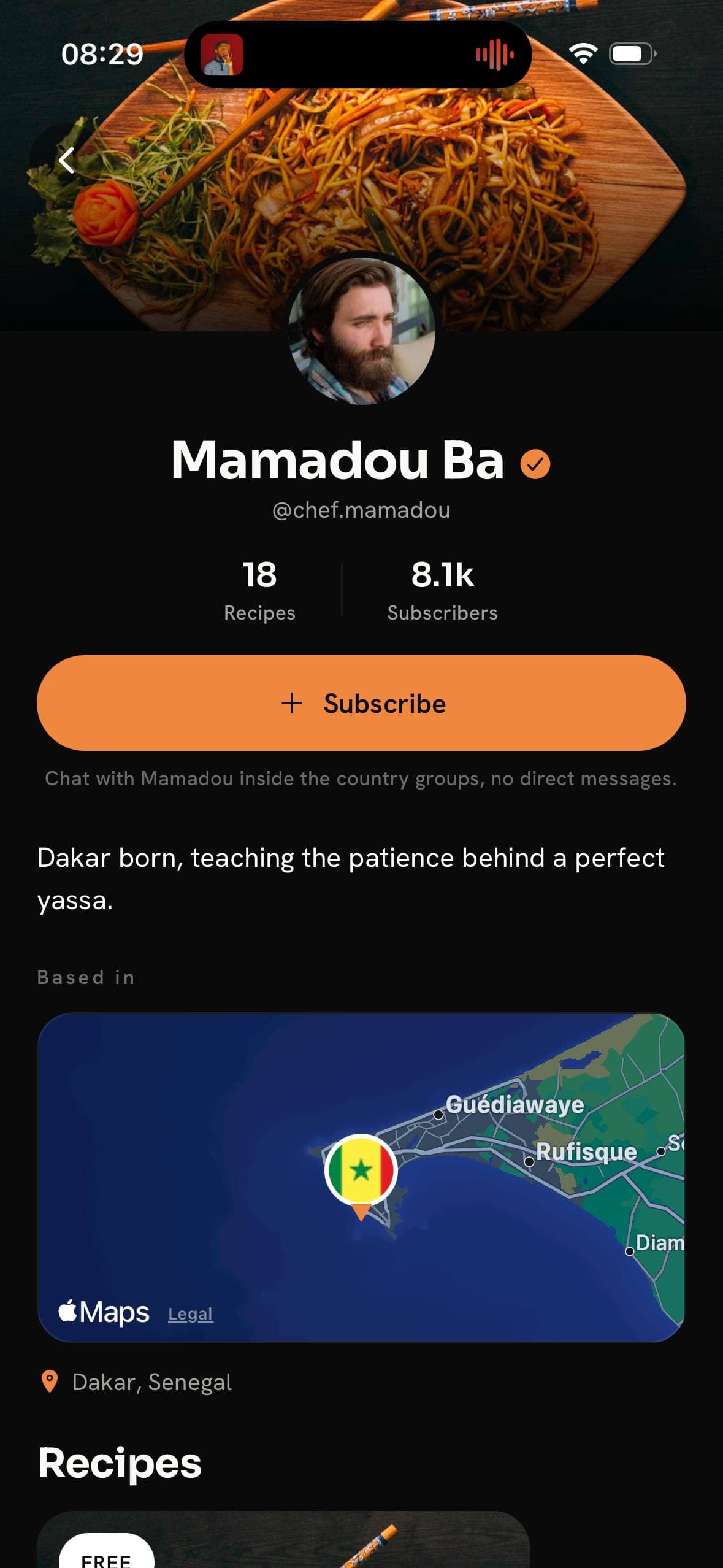
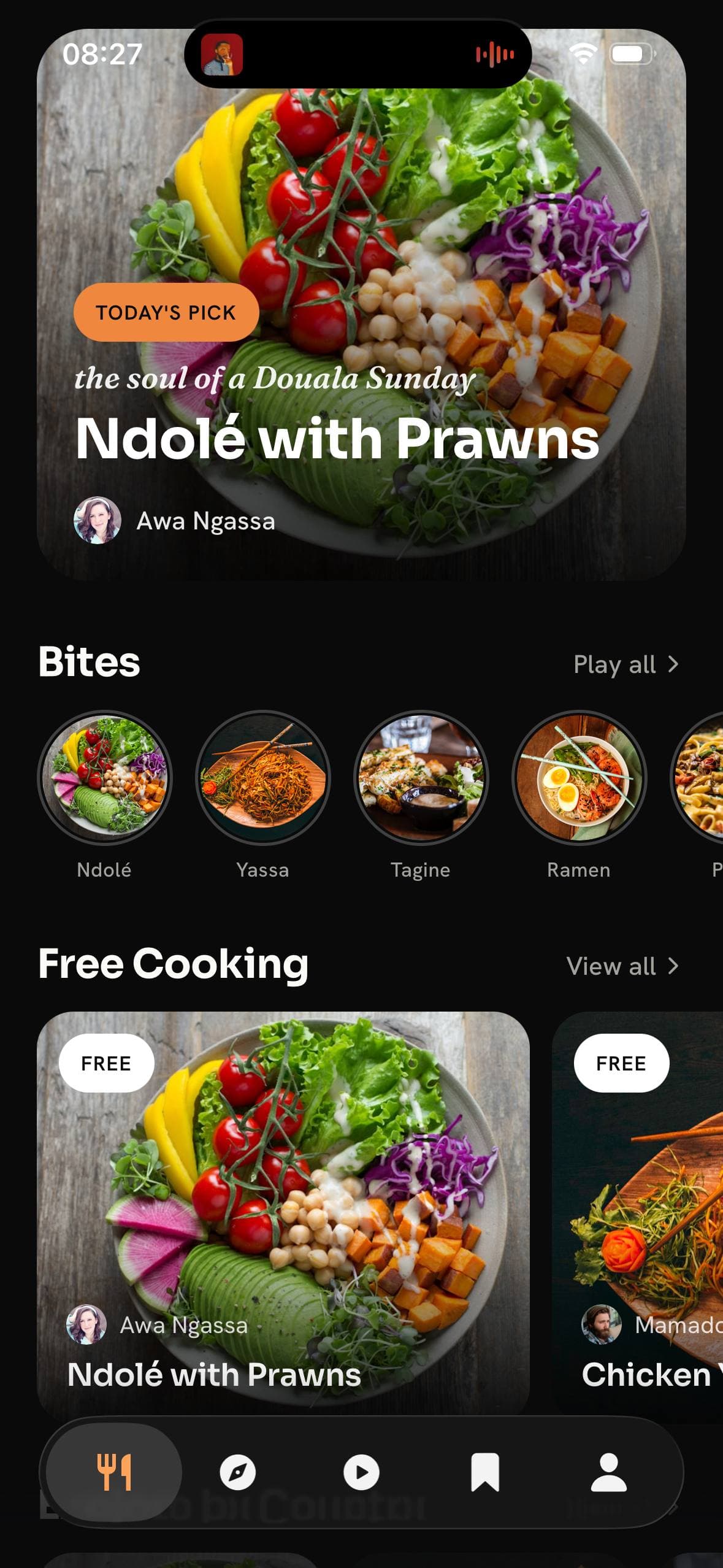
Recipes come from people who cook them at home, not from a test kitchen approximating them. Follow a chef and their reels land in your feed.
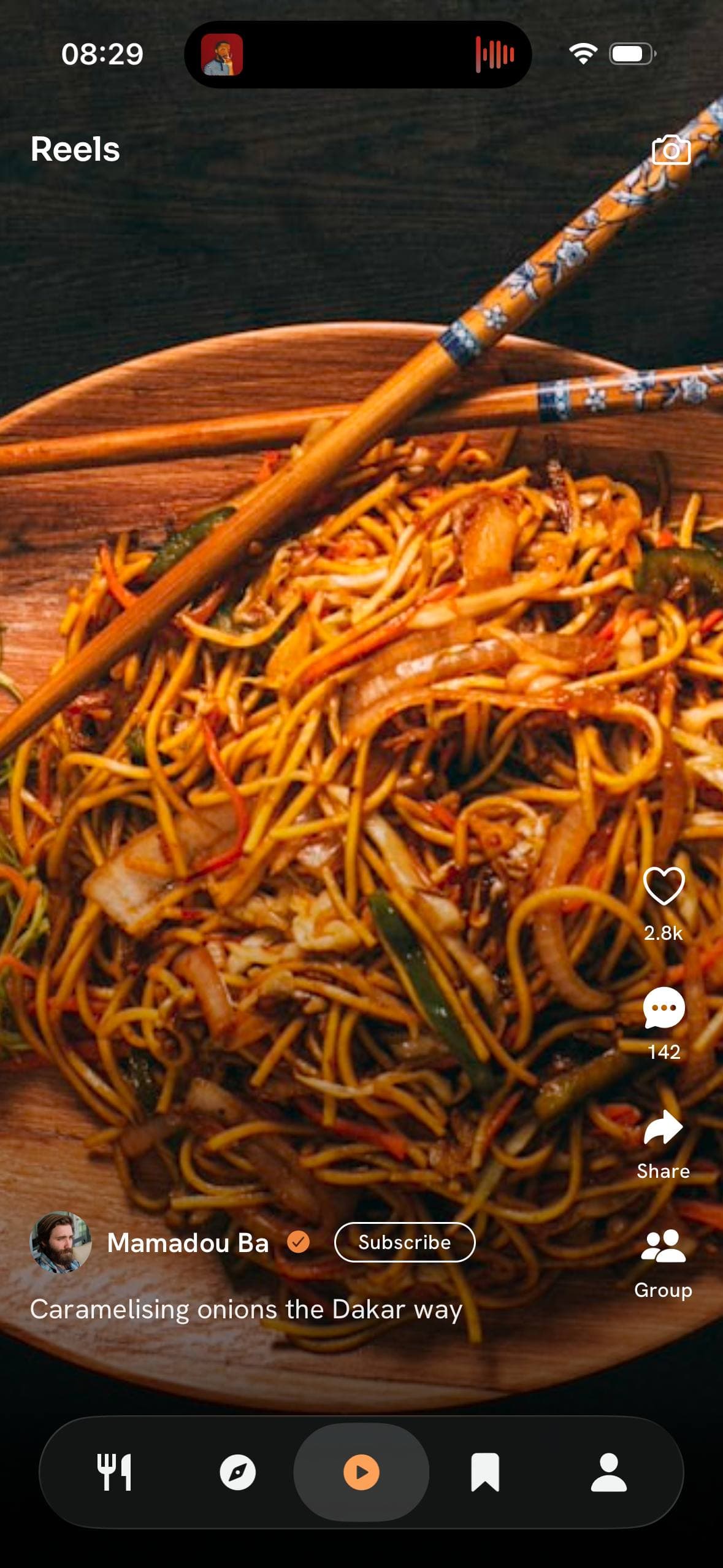
Some things do not survive being written down. Short video from the chefs themselves, tied to the dish it belongs to.
Every country has a group where people cooking the same thing compare notes. Ask the chef in the open, where the answer helps everyone.
The interface speaks English, French, Italian, Spanish, Chinese and Japanese. Dish names stay in their own language, because Ndole is Ndole everywhere.
Every country, every recipe and every chat, free for seven days. Then it is yours for the price of a coffee, and you can stop whenever you like.
From the map to the pan to the group that tells you what you got wrong.
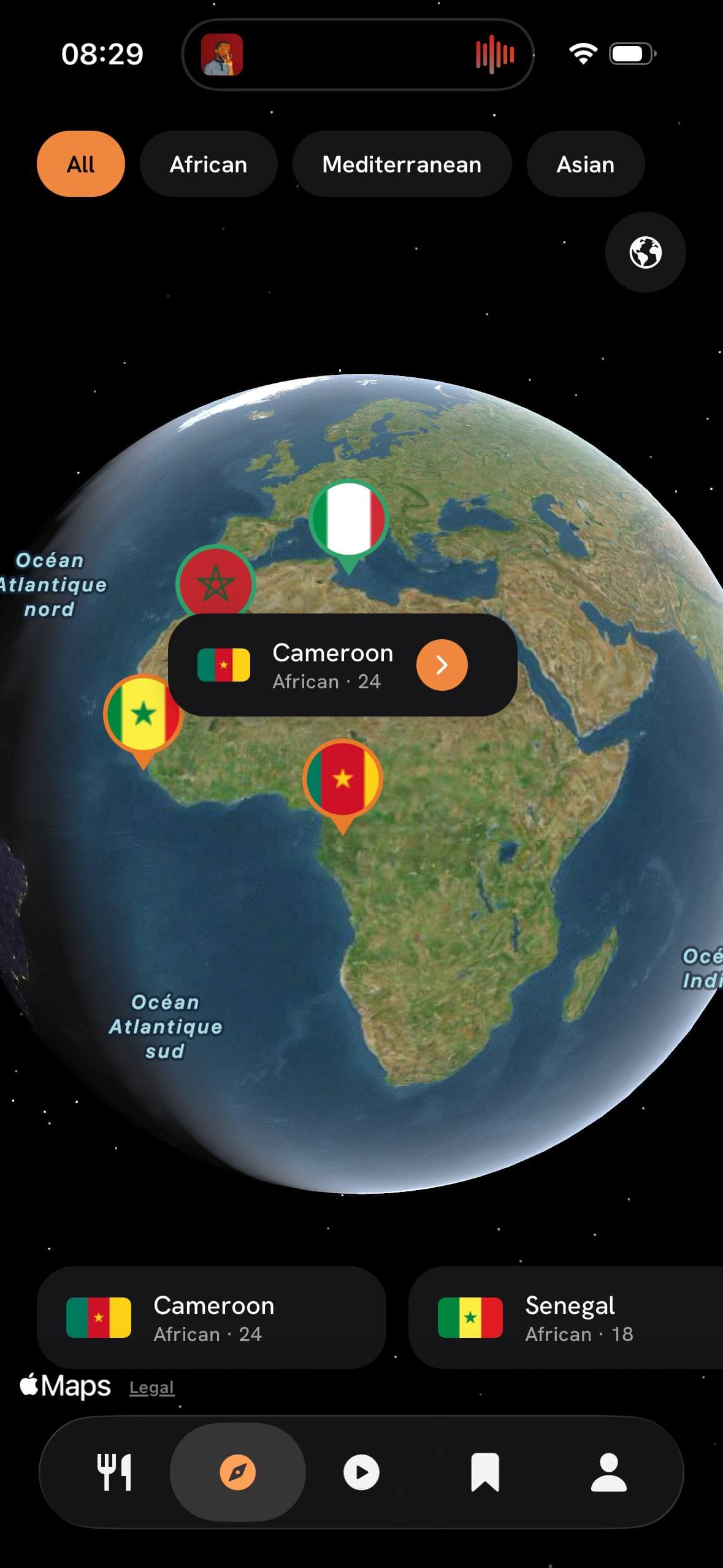
Start where you are curious. The map opens on every continent, one country at a time.
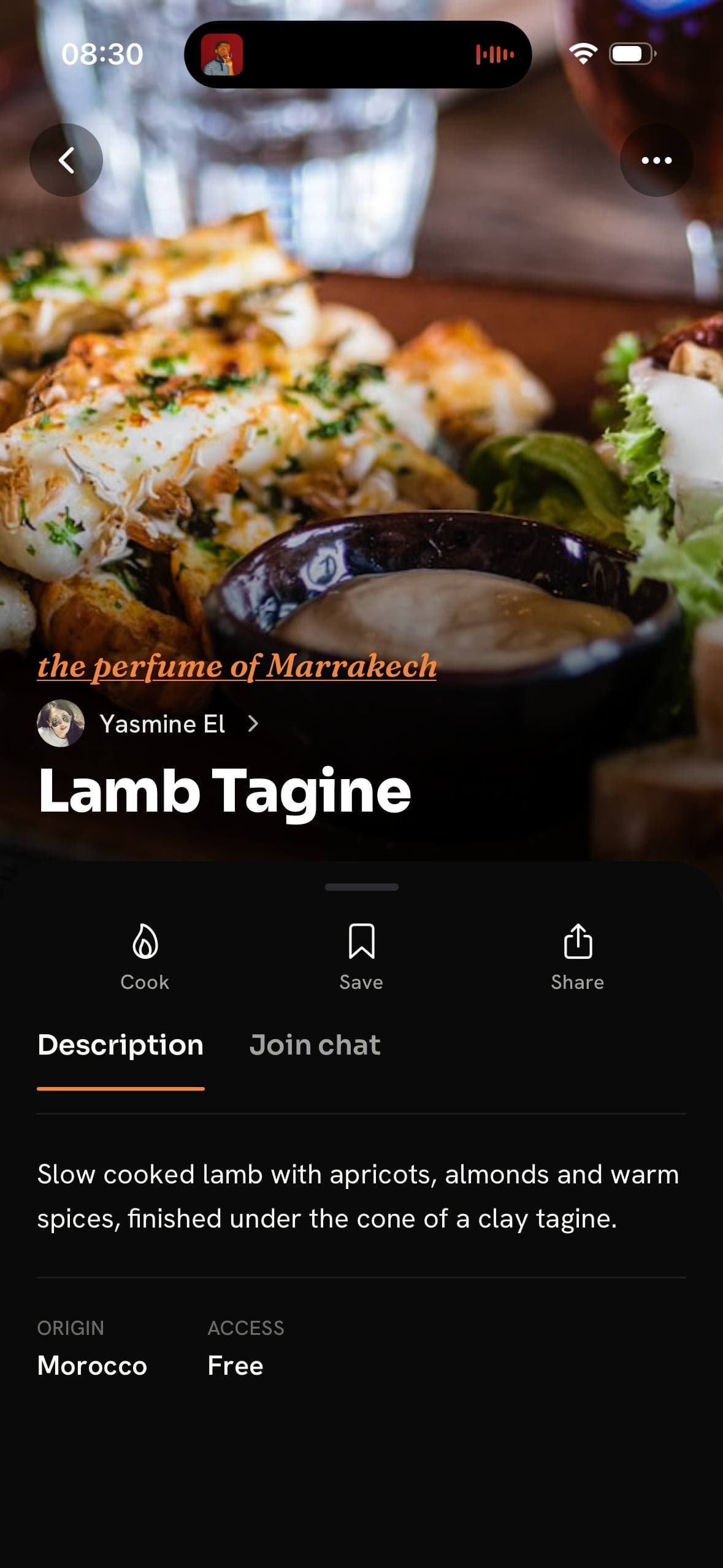
Before the ingredient list, the story: where the dish comes from, what it was for, and which part of it people argue about.
Steps, ingredients and video from the chef, in one place, in the language you set.
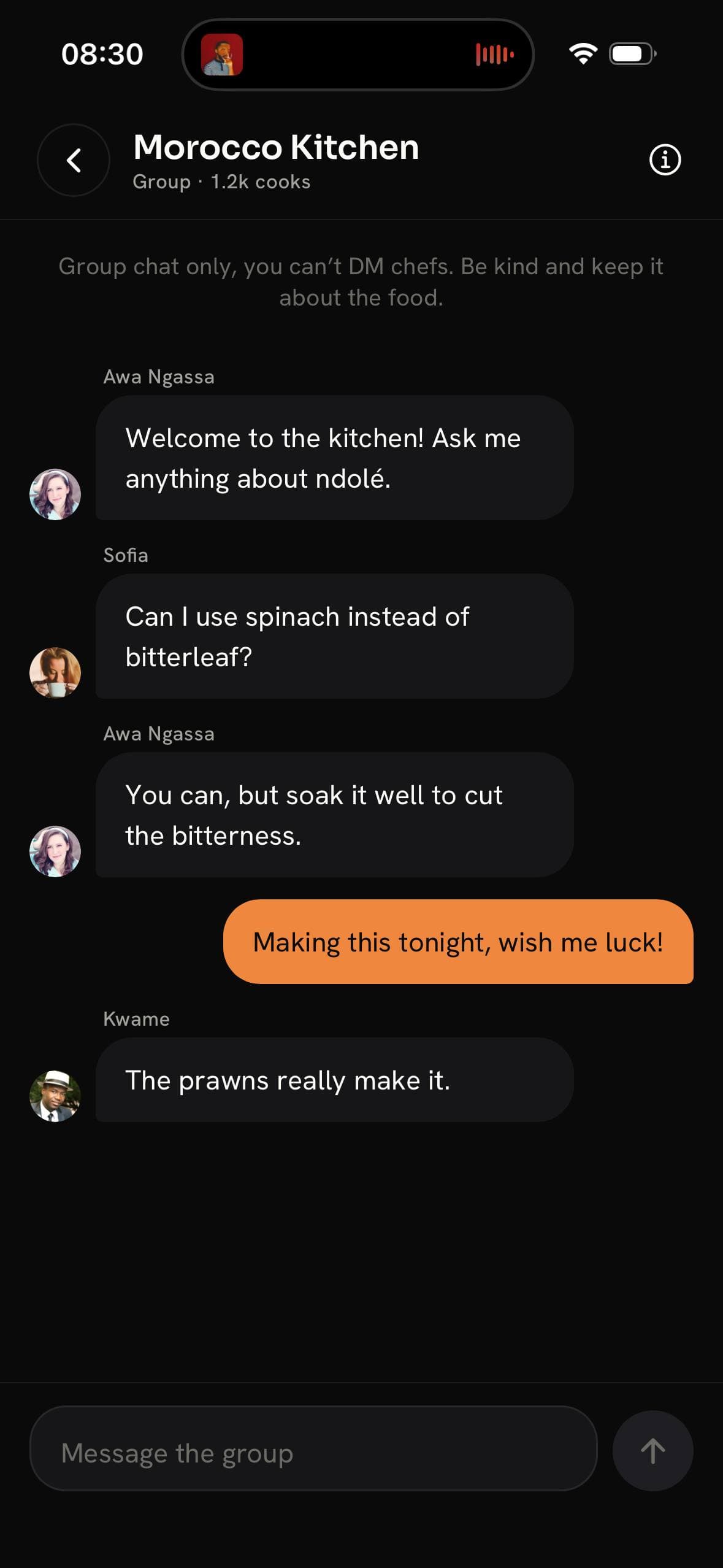
Post a photo in the country kitchen. Somebody who has made it fifty times will tell you what to change.
Countries from every continent, the chefs who cook them, and the conversation around every dish.
Everything Meymi has, from the first minute. Seven days free, then weekly, monthly or yearly.
39.99 €/ yearly
Every country, every recipe, and everything the chefs publish.
New countries join all the time, each with its chefs and its kitchen.
Days free, to taste everything
Continents, from Africa to Oceania
Languages, interface and recipes
Cooks who came for one dish and stayed for the country behind it.
And a few we would rather answer here than in an email.
Seven days of everything, through the App Store, before the first charge. Cancel during the week and nothing is billed.
The app is in six languages, and everything you need in order to cook is in the one you chose: the description, the cultural story, the quantities and the steps. Names are not translated, because a name is a name. Ndole is Ndole in every language. When a name is written in a script you may not read, it keeps that name and carries an English one in brackets beside it. An ingredient with no equivalent in your kitchen keeps its name too, and we explain what it is rather than swapping it for something more familiar.
Chefs who cook them, and the Meymi kitchen. Every chef is reviewed by a person before their work appears publicly. Some dishes are also sourced from open recipe databases and then checked and attributed by hand.
No, and that is deliberate. Conversation happens in the country and dish kitchens, in the open, where the answer to your question helps the next person with the same one.
From your App Store or Google Play subscription settings, the same as any other app. You keep access until the period you paid for runs out, then the app closes until you subscribe again.
Yes. Post photos and comments in the kitchens. To publish recipes and reels of your own you sign up as a chef, which unlocks the tools straight away, and your work becomes publicly visible once our team reviews the account.
Countries from every continent, the chefs who cook them, and the story behind every dish. Seven days free.